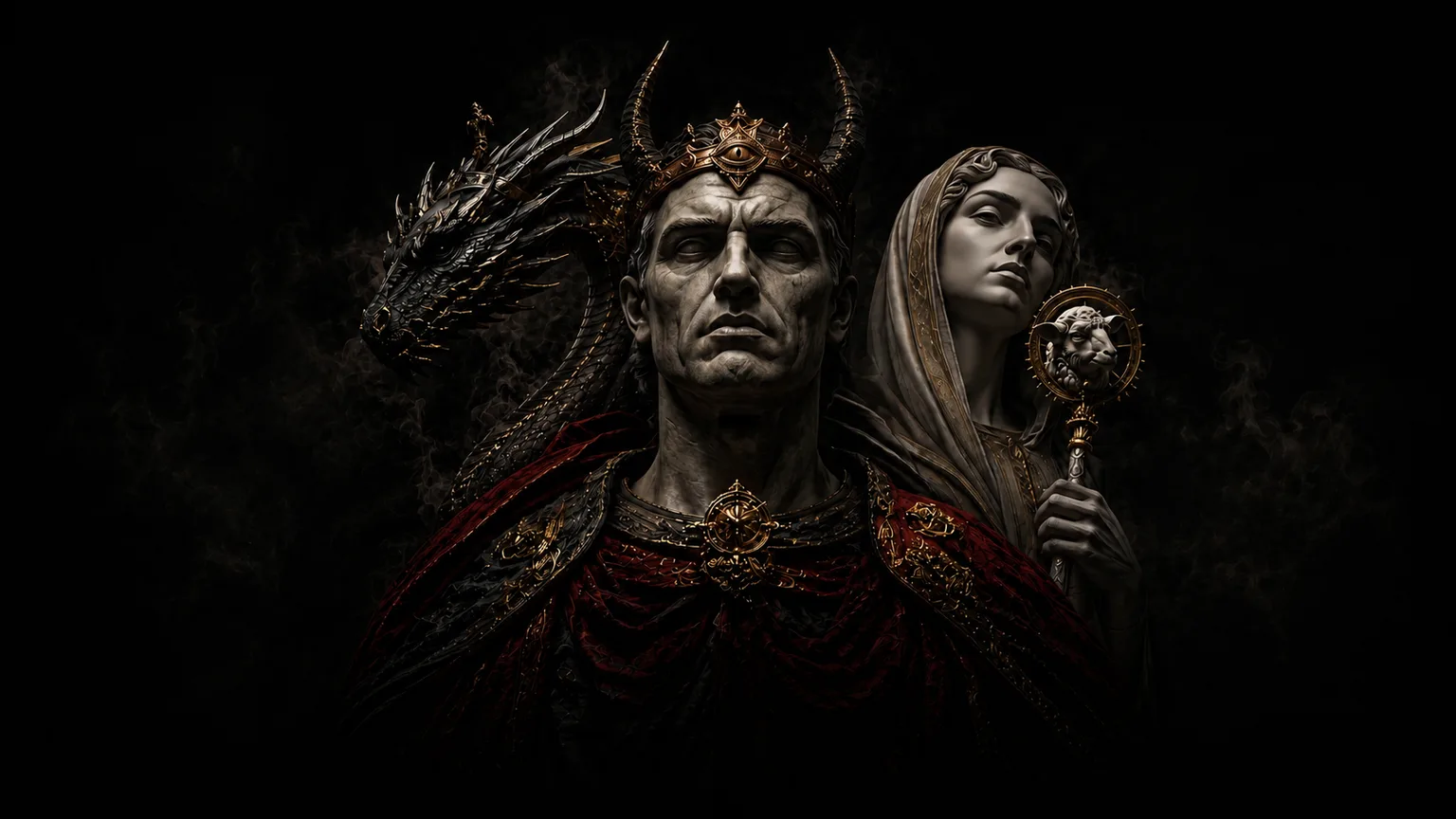
A crowned horned ruler between a dark dragon and a veiled figure holding a lion-faced mirror

A new book by Ramon Gil

TheRe-Imagingof Man

How the counterfeit gospel re-creates humanity
in the image of the beast.

“Seeing the Beast remake humanity changed how I read Revelation 13.”

Pre-purchase ebook · $9.99

90 day money back guaranteeRead it. Test the argument against Scripture.See the guarantee terms

See the book
Scroll to uncover

The central inquiry

What if the final counterfeit is not merely a mark—but an image?

666: The Re-Imaging of Man investigates a counterfeit formation: a rival gospel, a rival baptism, and a rival pentecost that seek to remake humanity around another image.

Read through the biblical frame of Revelation 13

An oil lamp and an open manuscript illuminated by dawn through a stone doorway

Attention before assumption.
Discernment before allegiance.

The threefold counterfeit

A dark trinity.
A remade humanity.

The book traces three interlocking figures and the spiritual pattern they form—without reducing prophecy to spectacle or fear.

I

The Dragon

The ancient pattern of deception behind counterfeit worship and distorted allegiance.
II

The Beast

The remaking of power, identity, and humanity around an image that demands conformity.

III

The False Prophet

The religious voice that gives sacred language to a counterfeit gospel and a rival formation.
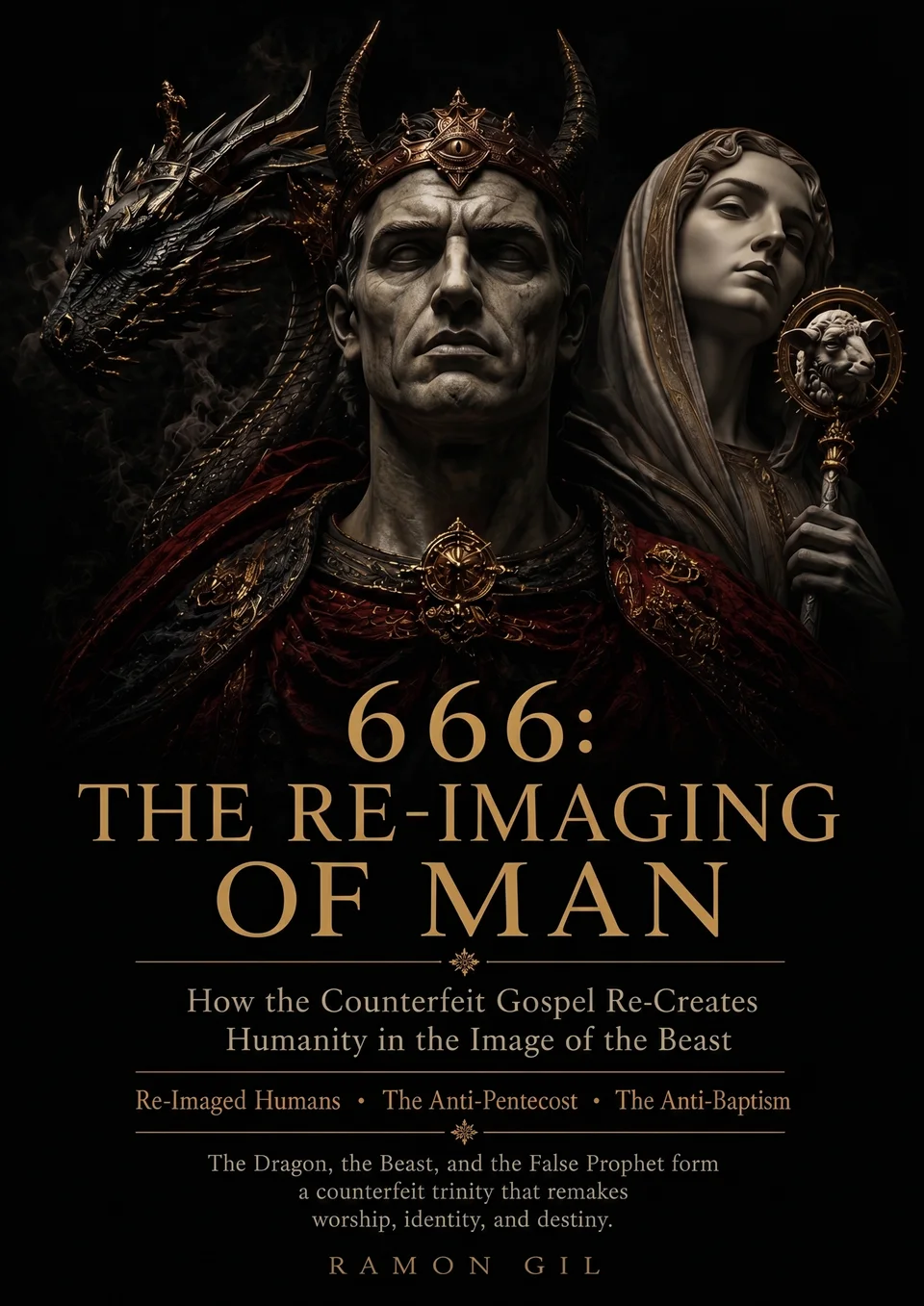
Cover of 666: The Re-Imaging of Man by Ramon Gil
Book cover · Ramon Gil

Inside the book

A counterfeit gospel.A remade humanity.

A Scripture-led investigation into how counterfeit worship reaches beyond belief and presses upon identity, allegiance, and destiny.

  • 01

    Re-Imaged Humans

    How counterfeit worship presses toward a counterfeit identity.

  • 02

    The Anti-Pentecost

    A rival spirit and power that animate another image.

  • 03

    The Anti-Baptism

    A rival sign of belonging, allegiance, and shared destiny.

Begin with a closer look at the opening chapters.

Explore the chapters

Inside the book

Follow the argument.

Not isolated symbols. A developing inquiry into worship, identity, and the formation of allegiance. Open a chapter to look inside.

A brief look at each argument.
The complete chapters are reserved for the book.

Chapter 01

Look inside

The Mark Is Not the Beginning

What happens before the final sign appears?

Revelation places worship, persuasion, and allegiance before the Mark. This chapter asks readers to revisit that sequence—and to consider where the warning begins in ordinary life.

It is easy to approach prophecy as a search for an object that can be identified and avoided. The opening chapter asks what that approach may leave unnoticed: the stories people trust, the power they admire, and the pressures that make a demand seem reasonable.

The invitation is to read the surrounding narrative carefully before drawing conclusions about its final sign. What deserves attention before a public decision is required? How can a warning about the future also examine the present? The chapter develops those questions through Scripture rather than a catalogue of modern predictions.

An editorial preview, not an excerpt from the full chapter.

Chapter 02

Look inside

How a Worshiper Is Made

A final decision has a history.

The letters to the churches bring the question of worship close to home. What happens when correction is heard, resisted, or explained away? The chapter follows the formation of the hearer before the public crisis.

The churches addressed by Christ already have histories, habits, and accounts of their own faithfulness. Their confidence does not remove the need to listen. The reader is invited to consider the distance that can open between a community’s self-description and the judgment it receives.

This is a chapter about attention as well as allegiance. What makes a difficult word worth hearing? When might comfort make correction harder to receive? Following these questions gives the later scenes of worship a human setting, without reducing every life to a single predictable sequence.

An editorial preview, not an excerpt from the full chapter.

Chapter 03

Look inside

The Beast With More Than One Face

How does a ruler’s influence outlive the ruler?

Revelation’s Beast reaches beyond a single face. This chapter considers how authority takes public form through people and institutions, while keeping Christ’s relation to His people in view.

A portrait of one powerful individual cannot by itself explain a world of shared obedience. Claims are repeated, decisions are carried out, and patterns survive beyond the person who first expressed them. The chapter invites the reader to notice that wider setting when approaching the Beast.

The comparison also requires care. Biblical language about Christ and His people should not be flattened into an account of machinery or control. How does authority become visible through many lives, and what distinguishes life-giving belonging from domination? Those questions guide the inquiry without revealing its complete development.

An editorial preview, not an excerpt from the full chapter.

Chapter 04

Look inside

The Counterfeit Trinity

Power arrives with a story about why it deserves obedience.

The Dragon, the Beast, and the False Prophet act together. The chapter examines the relationship between authority and the voice that validates it, inviting readers to test what appears sacred.

A command and an explanation do different work. One demands a response; the other teaches people how to understand the demand. In Revelation, the language surrounding power is therefore worth examining alongside the power itself. Persuasion and public testimony become part of the reader’s field of attention.

The chapter asks how a claim to authority comes to appear trustworthy, necessary, or holy. What does a witness direct attention toward? What should be tested before admiration becomes consent? Its scriptural comparison unfolds in the book; this preview introduces the problem that makes the comparison matter.

An editorial preview, not an excerpt from the full chapter.

Chapter 05

Look inside

Let Us Remake Man: Anti-Creation

An image, a breath, and a rival claim upon humanity.

Genesis and Revelation bring the language of image and life into a searching conversation. This chapter asks what is at stake when humanity receives its purpose from a source other than its Creator.

The creation account presents human life as received: a creature is given life, dignity, and a calling. That beginning supplies the setting for a question that runs through the book. Who has the authority to tell humanity what it is and what it is for?

Reading the language of image requires more than noticing a repeated word. The reader must attend to who acts, who speaks, and what response is demanded. This chapter brings those observations together gradually, preserving the distinction between the biblical text and the theological interpretation developed from it.

An editorial preview, not an excerpt from the full chapter.

Chapter 06

Look inside

Fire From Another Altar: The Anti-Pentecost

Does an extraordinary sign settle the question of truth?

The signs in Revelation demand discernment, not merely astonishment. This chapter considers how religious spectacle can lend credibility to a claim—and why the source of that claim still matters.

A striking event can capture attention before its meaning has been examined. The chapter asks readers to slow that movement from astonishment to confidence. A sign is encountered within a message, a claim to authority, and an invitation to respond; none of those surroundings should disappear from view.

What is being asked of the witness to an extraordinary event? Does the experience encourage careful testing, or make questioning seem disloyal? These are the questions at the entrance to the chapter. The fuller comparison and its supporting passages remain part of the reading itself.

An editorial preview, not an excerpt from the full chapter.

Chapter 07

Look inside

Baptized Into Another Body: The Anti-Baptism

Belonging is never an empty word.

The chapter begins with the biblical language of union with Christ, then raises the question of rival belonging. What kind of life does a community ask its members to receive and embody?

The language of belonging involves more than the name of a group. It touches identity, loyalty, and the life a person shares with others. Beginning with the Christian account of union with Christ gives the inquiry a positive foundation before it considers the danger of imitation.

The reader is invited to ask what a promise of acceptance includes. What is offered, what is required, and whose authority gives the promise its meaning? The chapter explores those questions through its biblical framework without treating every community or outward ceremony as the same thing.

An editorial preview, not an excerpt from the full chapter.

Chapter 08

Look inside

Becoming What We Worship: Re-Imaged Humans

What does sustained admiration make of a person?

Worship reaches beyond a declaration. This chapter follows its implications for character, speech, and the treatment of others, asking readers to examine the likeness taking shape in a human life.

Admiration can shape what people excuse, celebrate, and imitate. The question of worship therefore comes into view not only in a spoken profession but in the ordinary ways a life is practiced. The chapter invites reflection on that connection without turning a brief impression into a verdict about another person.

What kind of character is held up as desirable? How are strength, success, and faithfulness recognized? Keeping the Lamb in view provides an essential point of comparison. The book develops the contrast in detail; the preview leaves the reader with the question of what is being learned through sustained attention.

An editorial preview, not an excerpt from the full chapter.

Chapter 09

Look inside

When the Image Becomes a Civilization

A shared allegiance can shape an entire world.

Babylon and New Jerusalem present a contrast that reaches into public life. This chapter asks how worship finds expression in a community’s priorities, relationships, and understanding of the good life.

The visions of cities invite the reader to look beyond private conviction. A community gives public form to what it values: in its welcome, its rewards, its exclusions, and the stories it preserves. The chapter considers how those shared arrangements belong within Revelation’s larger contrast.

This is an invitation to examine a pattern, not to assign a prophetic label to every modern institution. What understanding of human worth does a public order express? Whose good does it serve? The chapter’s fuller reading of the two cities supplies the context in which those questions can be tested.

An editorial preview, not an excerpt from the full chapter.

Chapter 11 · Premium

Look inside

The Kingdom That Never Reaches Seven

666: a question that calls for wisdom.

Why does Revelation ask for wisdom here? This premium chapter takes up the question of 666. Its interpretation and supporting argument are reserved for the book.

A familiar number can attract confident answers long before its setting has received equal attention. This chapter invites a slower reading. It asks the reader to arrive with the questions developed through the preceding chapters, rather than expecting an isolated puzzle to carry the whole interpretation.

The preview deliberately stops at that threshold. It does not disclose the proposed meaning of the number, the steps of the interpretation, or the connections used to support it. Those belong to the premium chapter, where the argument can be encountered in sequence and assessed in its full context.

An editorial preview, not an excerpt from the full chapter.

Chapter 12

Look inside

The Court Reads the Image

Earth’s claims meet heaven’s judgment.

Daniel’s courtroom brings the investigation to its final horizon. This chapter turns from the authority claimed on earth to the judgment of God, holding the question of human identity before the true Judge.

The courtroom changes the reader’s vantage point. A power may speak loudly on earth and still stand accountable before a judgment it cannot control. Daniel’s vision asks what becomes of the claims that once appeared unquestionable when a different authority examines them.

The closing inquiry also brings human life into view. Questions of belonging, witness, and responsibility are gathered before God rather than settled by earthly success. How should that horizon shape the reading of everything that came before? The chapter carries the book toward its conclusion without making the Beast the final word.

An editorial preview, not an excerpt from the full chapter.

An open manuscript beside a burning lamp

An invitation to read

Begin before
the mark.

Start with the question that opens the book: what is forming a person before allegiance becomes visible?

Get a first look

Chapter One · Sample release in preparation

Watch · Listen · Read

A multimedia chamber for the book.

Each release will be intentional, accessible, and silent until you choose to begin.

Watch

Book Trailer

A short cinematic introduction to the book's central warning and biblical frame.

In preparation

Listen

Narrated Excerpt

An author-read passage with a full transcript and accessible playback controls.

In preparation

Read

Sample Chapter

A preview of the argument, citations, and voice before release.

Coming before release

Reader responses

Witness before promotion.

Advance-reader responses and endorsements will appear only after the words, attribution, and permission to publish have been confirmed.

No invented praise. Genuine responses will be added as the manuscript reaches readers.

Reader discussion

The conversation
continues.

Bring your questions. Share what challenged you. Explore the argument with Scripture, curiosity, and respect for one another.

Recent reflections

Reviewed before publication

Loading the discussion…

Reader comments are personal perspectives, not verified purchases or endorsements. Report a concern

Share a reflection

What question or passage stayed with you?

Sign in to leave a comment.

20–2,000 characters. Please leave out contact details and other private information.

Every comment is reviewed before it appears. Submitting a comment does not subscribe you to email updates.

Discussion guidelines

Discuss with respect

Engage with ideas and arguments, not personal attacks. Disagreement is welcome. Insults, threats, harassment, and hateful content are not permitted.

Stay connected to the publication

Share questions and reflections about this book or study. When quoting Scripture or another source, include the reference and distinguish quotations from your interpretation.

Protect privacy

Do not post email addresses, phone numbers, addresses, payment details, or private information about yourself or anyone else. If approved, your comment may appear with your first name and Google profile photo; your email is not displayed in the discussion.

Participate honestly

Do not impersonate others or post spam, advertising, requests for money, or repeated messages. Comments express their authors’ views and are not endorsements or verified purchases.

Allow time for review

Write between 20 and 2,000 characters. Every comment is reviewed before publication; submitting one does not guarantee publication. We may reject or remove comments that do not follow these guidelines.

Give consent before submitting

Sign in with Google and select the consent checkbox after reading these guidelines and the privacy policy. Submitting a comment does not subscribe you to email updates.

Report a comment or request removal

Use the report link beside a comment, or email secretossagrados@gmail.com. Include the publication link, the comment’s name and date, and a brief explanation. Avoid including unnecessary sensitive information.

Choose an edition

One message.
More than one way to receive it.

Reserve the ebook at its pre-purchase price. Audio editions are still in preparation.

Digital

Ebook Edition

Reserve the complete ebook for delivery at release.

PRE-PURCHASE SALE · EBOOK

Regular release price $19.99 $9.99 USD

Save $10.00 when you pre-purchase the ebook.

Pay when you pre-purchase; download at release. Expected delivery: To be confirmed before checkout opens.

Includes

  • Complete ebook
  • Sample chapter
  • Audiobook
  • Narrated sample
Pre-purchase ebook

Listen

Audiobook Edition

The complete narrated book for attentive listening.

To be announced

Includes

  • Complete audiobook
  • Narrated sample
  • Ebook
  • Readable sample

Availability and purchase details coming soon

Questions before you read

Frequently asked.

Clear answers will be updated as release details are confirmed.

01What is the book about?

666: The Re-Imaging of Man is a Christian examination of the dragon, the beast, and the false prophet as a counterfeit trinity—one that reshapes worship, identity, and destiny around a counterfeit gospel.

02Is the book available now?

The ebook is in preparation. Its pre-purchase price is $9.99 USD; the regular release price is $19.99 USD. Check the expected delivery window on the order page before paying.

03Will there be a sample chapter?

Yes. The site is being prepared to support a readable sample with clear access and download information once the excerpt is approved.

04Will audio and video be accessible?

Yes. Published video will include captions, spoken audio will include transcripts, and playback will never begin with audible sound without an explicit action.

05Can readers leave comments or reviews?

Yes. Share questions and reflections in Reader Discussion. Every submission is reviewed before publication, and comments remain separate from permissioned testimonials. Google sign-in is required to comment; no purchase is needed.

Secretos Sagrados presents

The question is not only
what you worship.

It is what that worship is making you become.

Return to the beginning
Chapter One · A closer look

666: The Re-Imaging of Man

The Mark Is Not the Beginning

What if the search for the mark begins too late? The opening chapter follows the world of authority, wonder, worship, and deception that Revelation describes before the mark appears. The question widens from what a person might receive to whom that person is learning to trust.

Read the sequence, not only the symbol

The chapter argues that the mark belongs to an architecture of worship and allegiance. It does not offer a prediction about a particular device. Instead, it asks what makes the final demand appear reasonable, necessary, or even sacred.

Hear the warning addressed to the churches

Before the Beast commands the world, Christ addresses His churches. Hearing, repentance, endurance, and the willingness to receive correction become central to the investigation. Discernment begins closer to home than speculation often allows.

Recognize a rival claim of belonging

The mark joins identity to public participation in the Beast’s order. Yet Revelation also names a people who belong to the Lamb. The chapter keeps both claims in view, without treating every pressure or compromise as identical to the final act of worship.

Questions to carry into the reading

  • What forms allegiance before it becomes a public choice?
  • When does the promise of survival become a claim to authority?
  • Whose correction are we still willing to hear?

Revelation 2–3, 11, 13, and 14

An editorial preview of the book’s argument, not the full chapter. Read and test the argument against Scripture.

Chapter Two · A closer look

666: The Re-Imaging of Man

The Making of a Worshiper

How does a person come to admire the very power that claims them? Chapter Two examines the struggle over who may interpret truth, suffering, victory, and correction. Its concern is not simply an outward act of worship, but the formation of the worshiper.

Who has the right to tell the truth about us?

The churches’ descriptions of themselves do not always match Christ’s assessment. The chapter explores how resistance to correction can protect a preferred identity, while repentance receives a truth that the self did not choose.

When silencing a witness feels like relief

The celebration surrounding the death of the witnesses exposes a conflict of interpretation: the earth sees tormentors where heaven recognizes witnesses. These scenes build a portrait of allegiance, not a universal psychological timetable for every individual.

Power can impress without deserving worship

The Beast’s apparent invincibility attracts wonder; the False Prophet actively directs that wonder toward worship. The chapter contrasts this reading of power with the Lamb, whose victory cannot be measured by earthly success alone.

Questions to carry into the reading

  • Can relief be mistaken for deliverance?
  • Why can apparent victory begin to sound like proof of truth?
  • What changes when the Lamb, rather than power, defines victory?

Revelation 1–3, 9, 11, 13, and 16

An editorial preview of the book’s argument, not the full chapter. Read and test the argument against Scripture.

Look earlier · A closer look

666: The Re-Imaging of Man

What is forming you?

A future warning can remain safely distant while present habits go unexamined. These opening chapters bring the question of allegiance into the present, without claiming that every ordinary pressure is the mark.

Begin before the demand

Chapter One reads the mark within a world already shaped by wonder, worship, deception, and coercion. Attention to that setting changes the question: not only what might happen later, but what is teaching us to call something true now.

Let discernment include the self

Christ’s words to the churches make this more than an investigation of an enemy outside us. The ability to receive correction matters. The book invites careful reading, honest self examination, and a willingness to hear.

Questions to carry into the reading

  • What voices repeatedly shape your understanding of safety and truth?
  • Does correction still have a place in the identity you protect?

Drawn from Chapters One and Two · Revelation 2–3 and 13

An editorial preview of the book’s argument, not the full chapter. Read and test the argument against Scripture.

Test the voice · A closer look

666: The Re-Imaging of Man

When power begins to sound sacred.

The counterfeit does more than demand obedience. It supplies an interpretation of its power. Chapter Two asks how wonder becomes worship when the voice explaining events is itself deceptive.

Distinguish power from its interpretation

Apparent survival and victory can become arguments for allegiance. In the chapter’s reading of Revelation, the False Prophet does not merely observe that attraction; he actively deceives and directs worship toward the Beast.

Examine the authority behind the invitation

Sacred appearance does not settle the question of a voice’s source. This is an invitation to test the argument against Scripture, not to label every impressive event or every disagreement as the final deception.

Questions to carry into the reading

  • When do we treat success as if it proves righteousness?
  • Who is teaching us what an event must mean?

Drawn from Chapter Two · Revelation 13

An editorial preview of the book’s argument, not the full chapter. Read and test the argument against Scripture.

Keep the Lamb in view · A closer look

666: The Re-Imaging of Man

Another measure of victory.

An investigation of the Beast can become distorted if it leaves the Lamb out of view. Both opening chapters hold together the danger of counterfeit allegiance and the reality of belonging to Christ.

Do not let survival define what is true

The Beast appears irresistible to those captivated by its power. The Lamb offers a different account of victory, one that cannot be reduced to avoiding every loss. The contrast challenges the idea that the strongest visible power must deserve our trust.

Belonging is more than resistance

Revelation also presents a people bearing the Lamb’s and the Father’s name. Hearing, repentance, testimony, and endurance give the inquiry a positive direction. The aim is discernment and faithfulness, not fascination with fear.

Questions to carry into the reading

  • Who defines victory when faithfulness carries a cost?
  • What does allegiance to the Lamb form in a person?

Drawn from Chapters One and Two · Revelation 13–14

An editorial preview of the book’s argument, not the full chapter. Read and test the argument against Scripture.