The earth as witness
Follow the study’s connections between uncovered blood, memory, and the exposure of injustice.
An illustrated Bible study by Ramon Gil · Spanish edition
The earth bears witness. The righteous Judge remembers.
Explore a theological reading of earthquakes, divine bowls, and heavenly judgment through the Torah, the Prophets, and Revelation. This eight-page illustrated study is available only in Spanish.
English edition not available
English purchases, downloads, and previews will be available when the English package is published.
View the Spanish edition →Law · Justice · Memory · Restoration
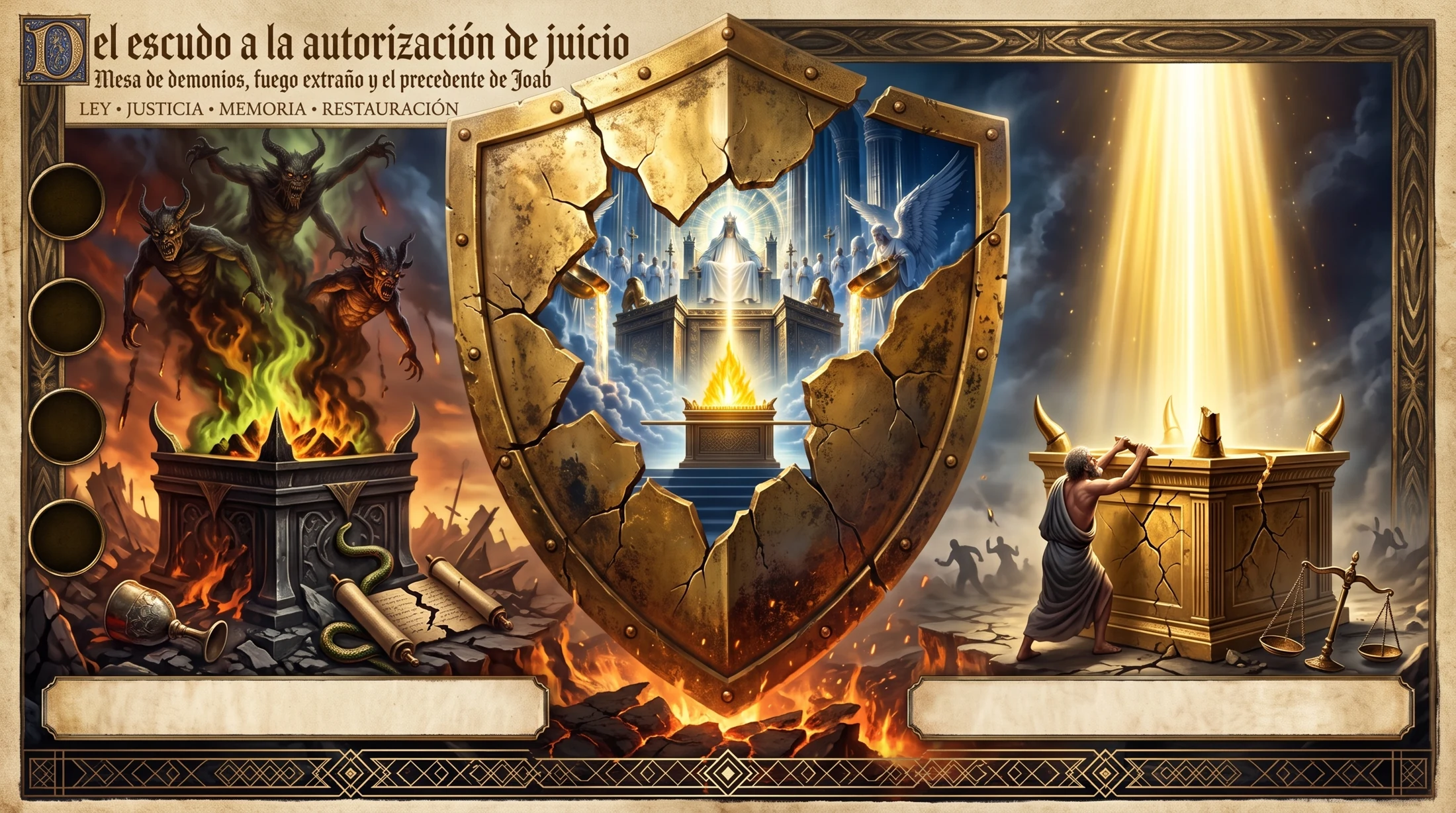
Ramon Gil develops a judicial reading of the earth as a witness, the cup as accumulated guilt, and the sanctuary as a setting of intercession and judgment. The study connects Leviticus 17:13, Isaiah 26:21, Matthew 23:32–35, and Revelation 16, then considers idolatry, the censer, and the kingdom that cannot be shaken in Hebrews 12. It presents a theological framework rather than treating every earthquake as the same kind of divine judgment. The complete document and its HD images are currently available only in Spanish.
Follow the study’s connections between uncovered blood, memory, and the exposure of injustice.
Consider accumulated guilt, the call to repentance, and the bowls in Revelation.
Explore the censer, the sanctuary, and the distinction between what can be shaken and what remains.
English purchases, downloads, and previews will be available when the English package is published.
Spanish edition
English purchases, downloads, and previews will be available when the English package is published.
Reader discussion
Bring your questions. Share what challenged you. Explore the argument with Scripture, curiosity, and respect for one another.
Loading the discussion…
The first approved comments will appear here. Thoughtful questions and respectful disagreement are welcome.
Reader comments are personal perspectives, not verified purchases or endorsements. Report a concern
What question or passage stayed with you?
Sign in to leave a comment.
Every comment is reviewed before it appears. Submitting a comment does not subscribe you to email updates.
Engage with ideas and arguments, not personal attacks. Disagreement is welcome. Insults, threats, harassment, and hateful content are not permitted.
Share questions and reflections about this book or study. When quoting Scripture or another source, include the reference and distinguish quotations from your interpretation.
Do not post email addresses, phone numbers, addresses, payment details, or private information about yourself or anyone else. If approved, your comment may appear with your first name and Google profile photo; your email is not displayed in the discussion.
Do not impersonate others or post spam, advertising, requests for money, or repeated messages. Comments express their authors’ views and are not endorsements or verified purchases.
Write between 20 and 2,000 characters. Every comment is reviewed before publication; submitting one does not guarantee publication. We may reject or remove comments that do not follow these guidelines.
Sign in with Google and select the consent checkbox after reading these guidelines and the privacy policy. Submitting a comment does not subscribe you to email updates.
Use the report link beside a comment, or email secretossagrados@gmail.com. Include the publication link, the comment’s name and date, and a brief explanation. Avoid including unnecessary sensitive information.