The accusation before the offering
Read the widow’s action beside Jesus’ charge against the scribes rather than as an isolated lesson about giving.
An illustrated Bible study by Ramon Gil · Spanish edition
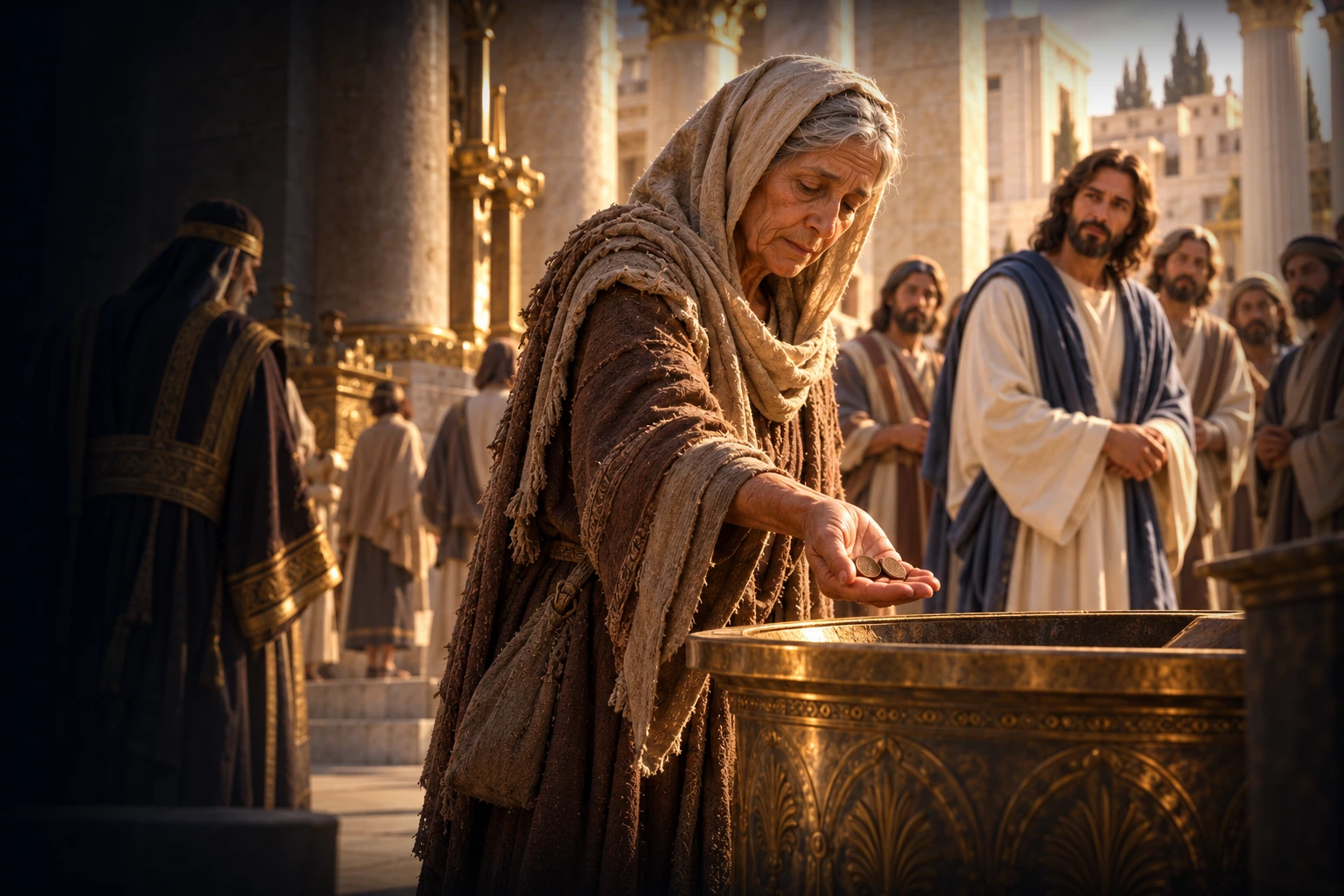
The widow gave everything. Who was meant to care for her?
A Sanctuary Judicial reading of the widow, her two coins, the scribes who devour widows’ houses, and the judgment Jesus announces over the Temple. The complete study is available only in Spanish.
English edition not available
English purchases, downloads, and previews will be available when the English package is published.
View the Spanish edition →Context · Custody · Provision · Judgment
The study preserves the widow’s dignity while reading her gift inside its immediate narrative sequence. Jesus condemns those who devour widows’ houses, observes a poor widow surrender her entire livelihood to the treasury, and then announces the fall of the Temple. Together, those scenes raise a judicial question about the religious order that received the sustenance of the person it was commanded to protect.
Read the widow’s action beside Jesus’ charge against the scribes rather than as an isolated lesson about giving.
Two small coins reveal the difference between giving from surplus and surrendering the means of survival.
Follow the covenant duty to sustain the widow and the verdict pronounced upon an institution that received her livelihood.
English purchases, downloads, and previews will be available when the English package is published.
Spanish edition
English purchases, downloads, and previews will be available when the English package is published.
Reader discussion
Bring your questions. Share what challenged you. Explore the argument with Scripture, curiosity, and respect for one another.
Loading the discussion…
The first approved comments will appear here. Thoughtful questions and respectful disagreement are welcome.
Reader comments are personal perspectives, not verified purchases or endorsements. Report a concern
What question or passage stayed with you?
Sign in to leave a comment.
Every comment is reviewed before it appears. Submitting a comment does not subscribe you to email updates.
Engage with ideas and arguments, not personal attacks. Disagreement is welcome. Insults, threats, harassment, and hateful content are not permitted.
Share questions and reflections about this book or study. When quoting Scripture or another source, include the reference and distinguish quotations from your interpretation.
Do not post email addresses, phone numbers, addresses, payment details, or private information about yourself or anyone else. If approved, your comment may appear with your first name and Google profile photo; your email is not displayed in the discussion.
Do not impersonate others or post spam, advertising, requests for money, or repeated messages. Comments express their authors’ views and are not endorsements or verified purchases.
Write between 20 and 2,000 characters. Every comment is reviewed before publication; submitting one does not guarantee publication. We may reject or remove comments that do not follow these guidelines.
Sign in with Google and select the consent checkbox after reading these guidelines and the privacy policy. Submitting a comment does not subscribe you to email updates.
Use the report link beside a comment, or email secretossagrados@gmail.com. Include the publication link, the comment’s name and date, and a brief explanation. Avoid including unnecessary sensitive information.