Biblical investigation
When the Cup Is Full: Why God Delays Judgment
Scripture does not portray final judgment as an outburst. It reveals a measured process in which mercy warns, guilt accumulates, repentance closes, and the sanctuary itself changes function.
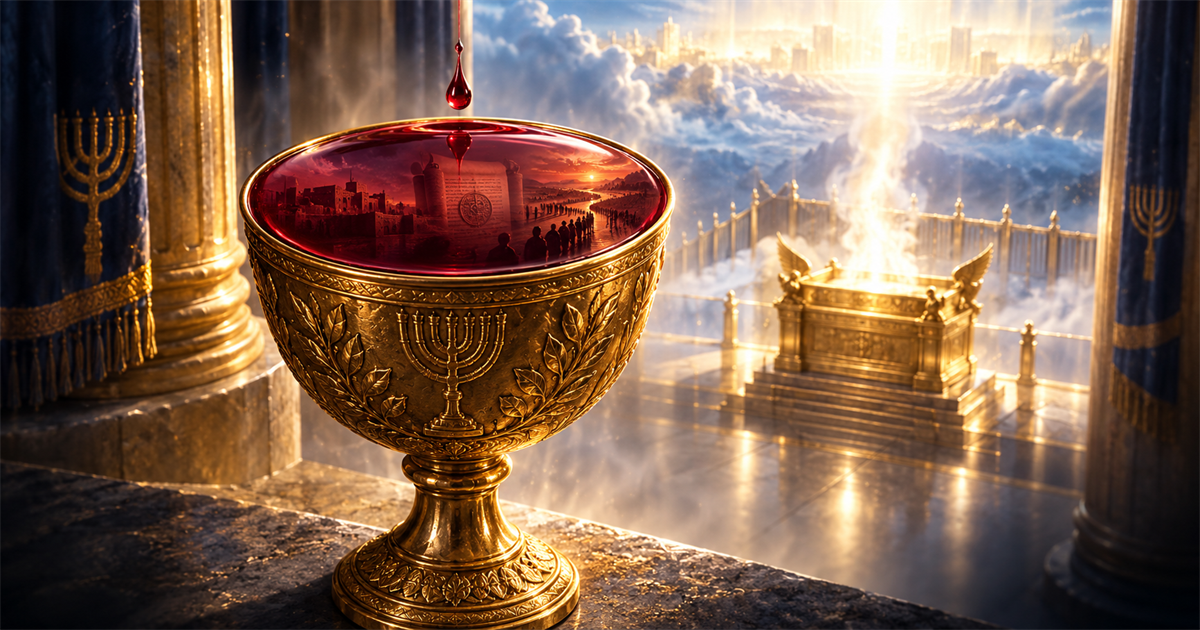
Why does God wait while evil grows?
The question is older than any one generation. Scripture repeatedly shows violence continuing, blood remaining unanswered, and proud kingdoms appearing to escape the consequences of what they have done. Then, sometimes within a single night, the delay ends. A city falls. A kingdom loses its authority. A sentence that seemed suspended suddenly becomes irreversible.
The waiting can make God appear absent. The suddenness can make Him appear severe.
The Bible presents another explanation.
Before Israel possessed the land of Canaan, God told Abraham that his descendants would remain strangers for generations because “the iniquity of the Amorites is not yet full” (Genesis 15:16). The promise had been given, but judgment could not yet be executed. Something remained incomplete.
That sentence reveals a principle running from Genesis to Revelation. Final judgment does not arrive because God has lost patience in an emotional outburst. It follows a long process in which wrongdoing is witnessed, mercy restrains the sentence, warnings are given, and repeated refusal brings the case to completion.
This has a name: the Full Cup Principle.
The cup is the biblical image of a measured moral capacity. Every act of violence, every rejected warning, and every truth knowingly suppressed adds weight to a public record. God does not need time to discover what happened. The delay gives human beings time to repent and gives history time to reveal what their chosen allegiance is becoming.
The cup is not the measure of God becoming angry. It is the measure of a case becoming complete.
That discovery changes the meaning of divine patience. Longsuffering is not indifference. It is a judicial stay, a real suspension of execution while mercy continues to speak. The sentence is deserved, but it is not yet carried out. The door remains open because repentance remains possible.
It also changes the meaning of accumulated guilt. Scripture does not teach that a child becomes personally guilty merely because an ancestor sinned. The later generation becomes answerable when it receives the unfinished legacy, recognizes its character, and chooses to continue it. What began in the fathers is filled up by the children who repeat, defend, and complete the same rebellion.
Jesus used precisely this language when He confronted leaders who honored murdered prophets with monuments while resisting the truth those prophets proclaimed. “Fill up, then, the measure of your fathers,” He said (Matthew 23:32). They were not condemned for possessing a family tree. They were exposing themselves as heirs by finishing the work.
The same pattern appears in Revelation. Beneath the altar, the martyrs ask how long their blood will remain unanswered. They are told to rest a little longer, not because heaven has forgotten them, but because the testimony has not yet reached its appointed fullness (Revelation 6:9–11). Later, Babylon is remembered before God, and the cup she used to intoxicate the nations returns as the cup of judgment she must drink (Revelation 16:19; 18:5–6).
The delay and the cup belong to the same legal movement.
Mercy is holding back a sentence while history supplies its evidence.
Yet Scripture adds one more element, and it is the most unsettling. The process does not end merely because the record has grown long. It ends when warning no longer produces repentance. At that point, the sanctuary that once mediated restraint begins to announce execution.
The altar remains.
The cup remains.
But their function changes.
How a Cup Begins to Fill
Moral saturation is not simply a large quantity of bad behavior. It is the condition reached when rebellion has been repeatedly exposed, restrained, and warned, yet continues until its character is fully revealed.
The first movement begins with blood that remains uncovered.
Leviticus treats blood as life belonging to God. When innocent blood is shed and left uncovered, the crime does not disappear into the ground. It remains as testimony. Abel’s blood cries from the earth. The blood of the martyrs speaks beneath the altar. In both scenes, violence has produced evidence that creation and sanctuary carry before the Judge (Genesis 4:10; Revelation 6:9–10).
This is why Revelation can say that Babylon’s sins have reached heaven and that God has remembered her crimes (Revelation 18:5). The language is not describing a sudden recollection. It is announcing that the record has reached the point at which it must be heard.
Every empire builds monuments to its victories. Heaven preserves another archive: the lives those victories consumed.
When a society refuses to uncover blood through truth, repentance, and justice, the blood does not vanish. It remains in the case.
But uncovered blood is only the first movement. The cup also gathers the guilt a later generation knowingly completes, and it records what repeated warning does to a heart that will no longer repent. Those two movements explain why the altar eventually stops shielding and why heaven closes the sanctuary to further intercession.
Continue with a free Reader account
Sign in with a verified Google account to continue reading. No Research Credits are required.