Biblical investigation
Why Barabbas Walked Free: The Day of Atonement in Jesus’ Trial
The exchange between Jesus and Barabbas was more than a political injustice. Before the cross was raised, the judgment seat made substitution visible.
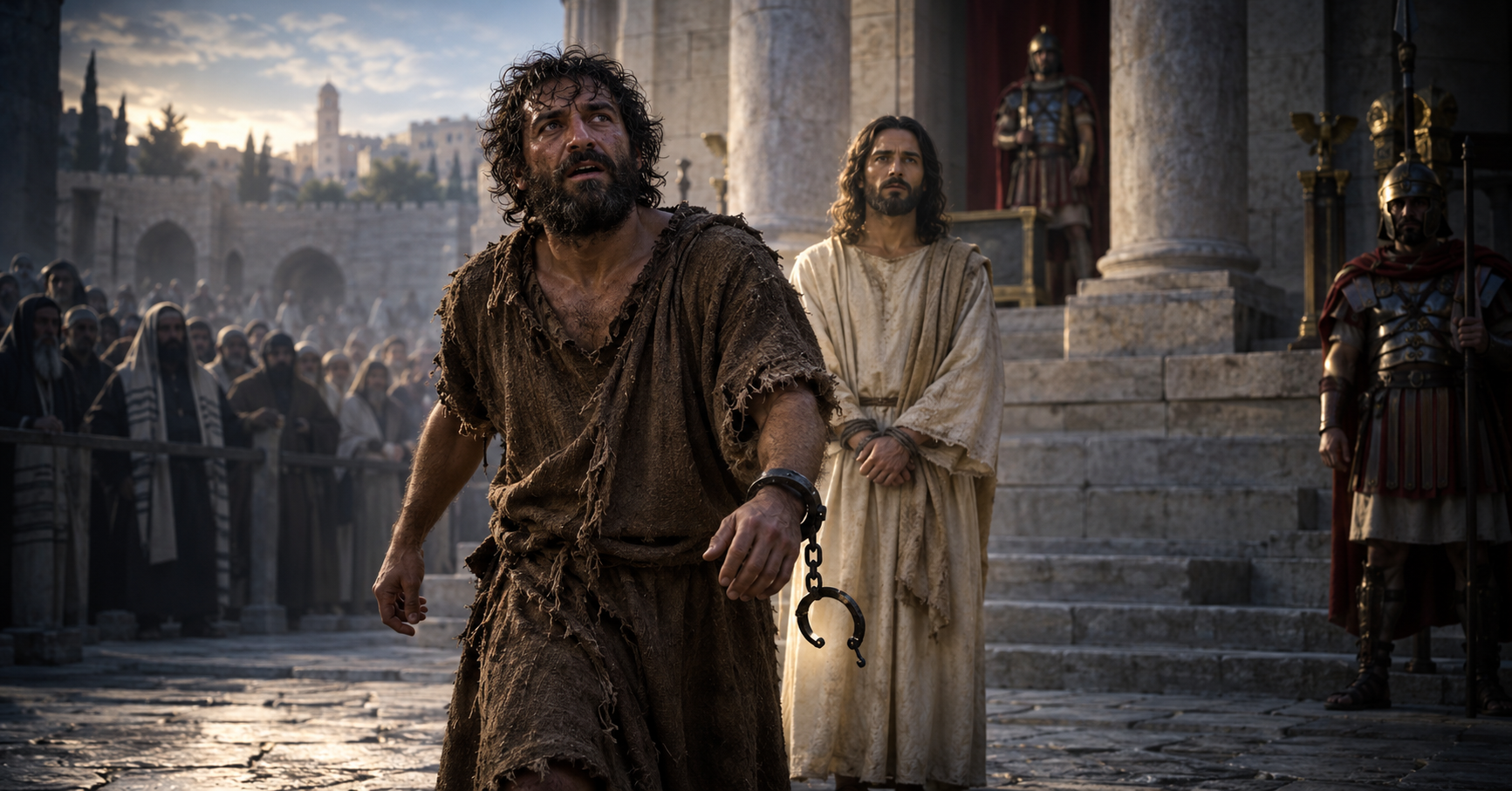
Barabbas should have died that morning.
Jesus should have walked free.
Barabbas was a convicted rebel, a robber, and a murderer. Jesus stood before the same court without a crime that could be proved against Him. Pilate repeatedly declared that he found no fault in Jesus, yet the guilty man was released and the innocent Man was condemned.
The familiar explanation places the blame upon political weakness, religious hostility, and the volatility of the crowd. All of those forces were present. But they do not explain why the Gospel preserves the exchange with such care.
Why must two prisoners be presented together? Why does Pilate repeatedly ask which one should be released? Why does one man leave the judgment seat alive while the other is handed over for sacrifice?
The scene becomes intelligible when it is read through the sanctuary law of the Day of Atonement.
Long before Jesus and Barabbas stood before the Roman judgment seat, Leviticus established a ceremony involving two goats. They were presented together before the Lord. A judicial distinction was then made between them. One was released alive. The other was slain, and its blood entered the sanctuary to make atonement.
At Pilate’s judgment seat, that ancient sanctuary pattern entered history.
The Two Goats of the Day of Atonement
The Day of Atonement, known as Yom Kippur, was Israel’s most solemn day of sanctuary judgment and cleansing. Leviticus 16 describes the high priest presenting two goats before the Lord at the entrance of the Tabernacle.
The goats came from the same offering, but they were assigned different destinations.
One lot was designated La YHWH, meaning “for the Lord.” That goat was slain as a sin offering. Its blood was carried behind the veil and applied within the sanctuary to make atonement for the holy place and for the accumulated uncleanness of the people.
The other lot was designated L’Azazel. This goat remained alive. The high priest placed his hands upon its head and confessed over it the iniquities, transgressions, and sins of Israel. It was then sent away from the camp into an uninhabited land.
One goat moved toward the altar and the shedding of blood.
The other moved away from death under a sentence of release.
These were not two unrelated animals performing separate religious functions. Together, they formed one judicial revelation. The ceremony distinguished between the life that would be surrendered and the life that would be released.
That same distinction appears upon the trial floor in Jerusalem.
Two Defendants Before the Judgment Seat
Pontius Pilate did not present the crowd with a general question about mercy. He placed two specific prisoners before them.
The first was Barabbas. The Gospels identify him as a robber, an insurrectionist, and a murderer involved in a rebellion. He was not awaiting trial as a possibly innocent man. He was already a condemned prisoner whose actions had made him liable to death.
The second was Jesus called Christ.
Pilate examined Jesus and found no legitimate basis for execution. John records the governor declaring His innocence three times. Jesus stood before the court as the unblemished candidate, while Barabbas stood beside Him as guilty human clay.
The contrast becomes even more arresting when their names are considered.
Some early textual witnesses to Matthew preserve Barabbas’s full name as Jesus Barabbas, a reading already discussed in the early centuries of the Church. The name Barabbas comes from the Aramaic Bar Abba, meaning “son of the father.”
The judgment seat therefore held two figures before the people:
- Jesus Barabbas, a guilty man called the son of the father
- Jesus the Messiah, the innocent and true Son of the Father
One bore the title while embodying rebellion.
The other possessed the true identity while embodying perfect obedience.
This was more than an ironic similarity of names. The two defendants formed a judicial contrast between two kinds of sonship and two representatives of humanity. Barabbas represented the fallen human being who had joined rebellion and incurred judgment. Jesus represented the obedient Son in whom no fault could be found.
The court was being asked to distinguish between them.
Continue with a free Reader account
Sign in with a verified Google account to continue reading. No Research Credits are required.