The road and the wounded traveler
Consider the journey from Jerusalem to Jericho, the assault, and the priest and Levite who pass by.
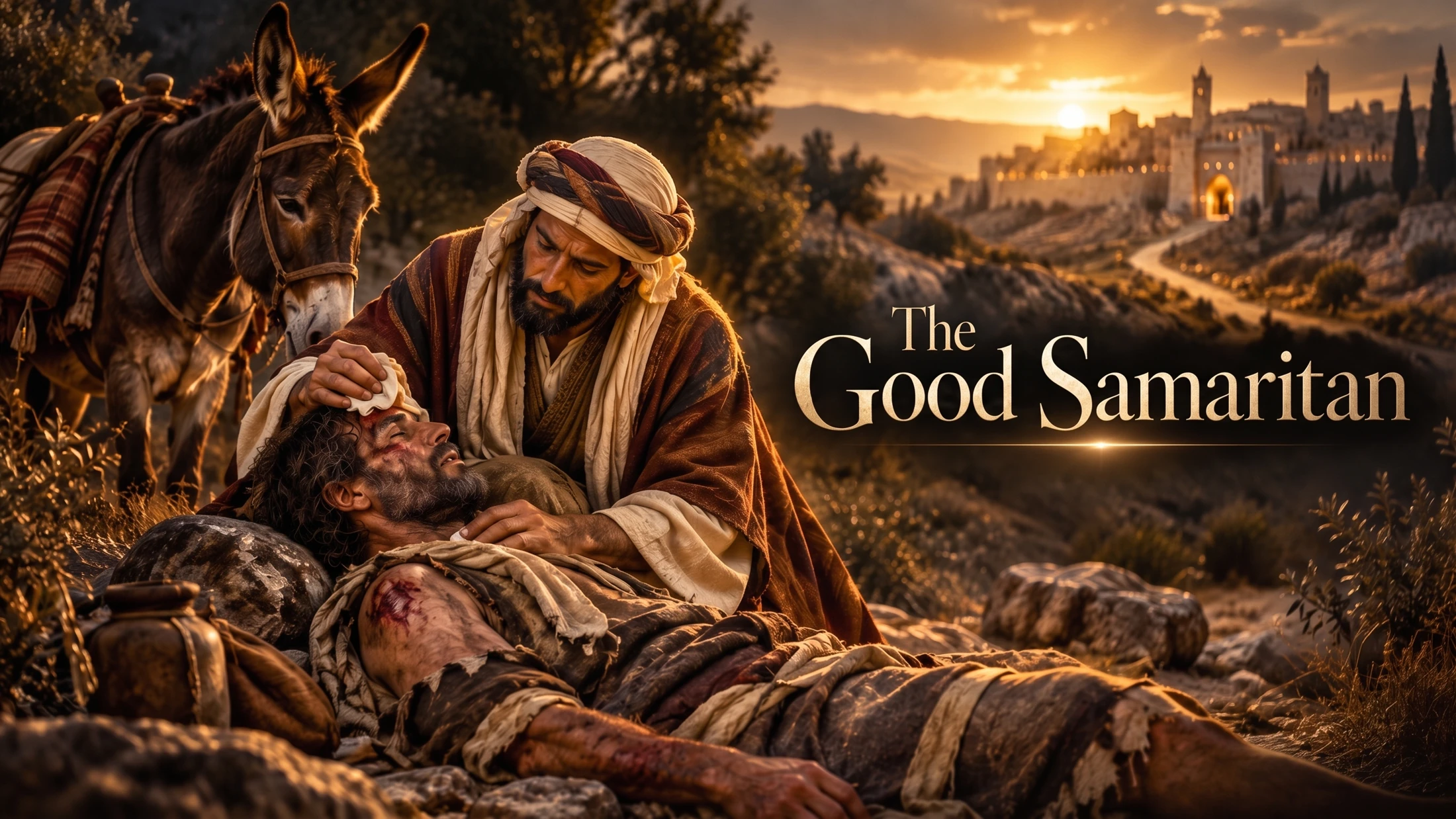
An illustrated theological study by Ramon Gil
Mercy enters the road where law could not heal.
Journey from Jerusalem to Jericho through a sanctuary-judicial reading of Luke 10. This illustrated study follows the wounded traveler, the Samaritan’s compassion, and the promise of return through the themes of covenant, redemption, and restoration.
Mercy · Covenant · Restoration
The study begins with the lawyer’s question in Luke 10 and develops a symbolic reading through the heavenly sanctuary. It distinguishes the story’s events, images, and covenantal meanings, exploring humanity’s need, Christ’s intervention, and the care entrusted to His stewards.
Consider the journey from Jerusalem to Jericho, the assault, and the priest and Levite who pass by.
Explore the study’s reading of the Samaritan as Goel, the Redeemer, and the care expressed through oil, wine, bandages, and transport.
Follow the innkeeper, the two denarii, and the promise to return through the study’s themes of stewardship and reconciliation.
Look inside
Preview the cover and first two content pages of the complete nine-page English study.
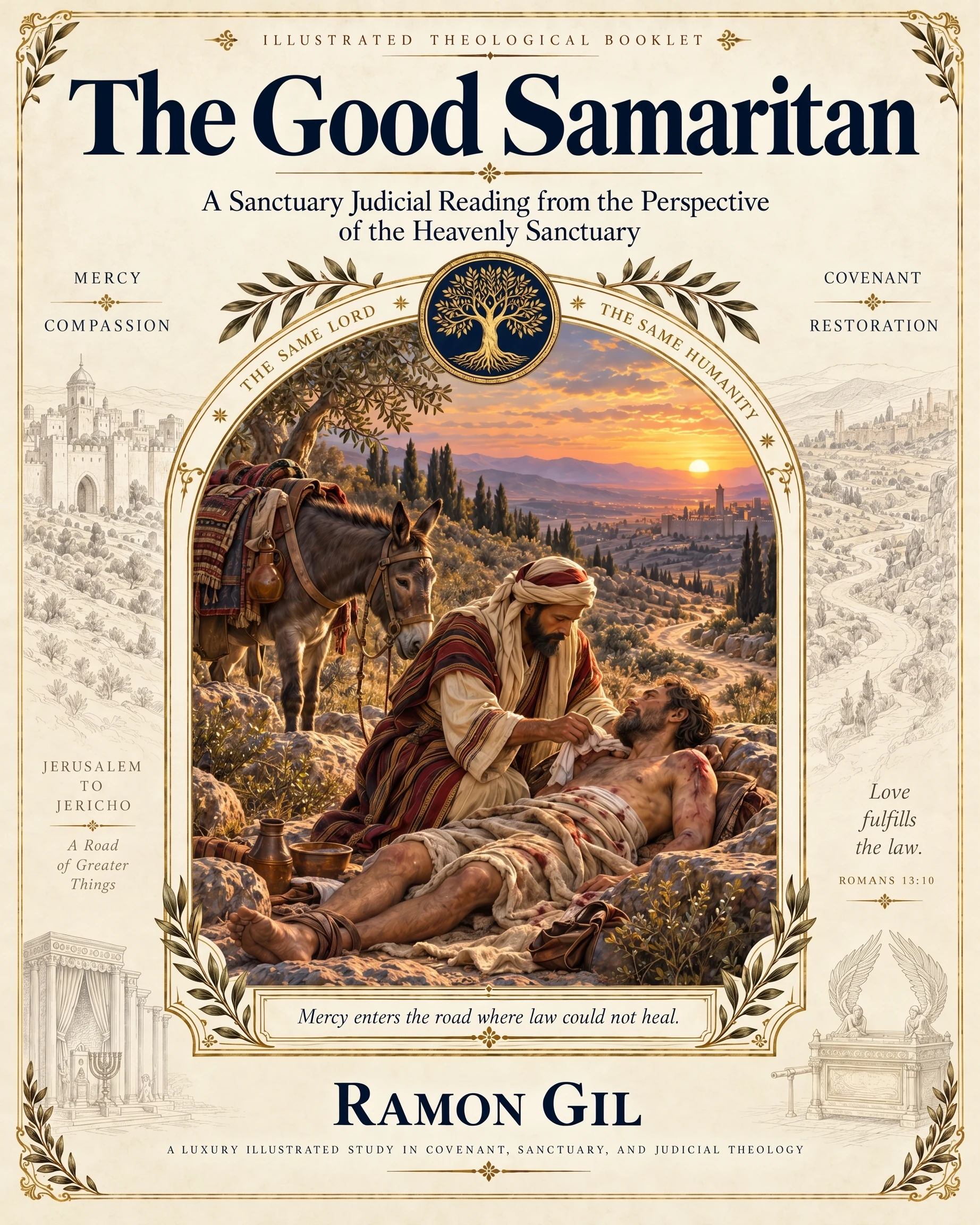
The Good Samaritan: A Sanctuary Judicial Reading from the Perspective of the Heavenly Sanctuary, by Ramon Gil. An illustrated theological booklet exploring mercy, compassion, covenant, and restoration.
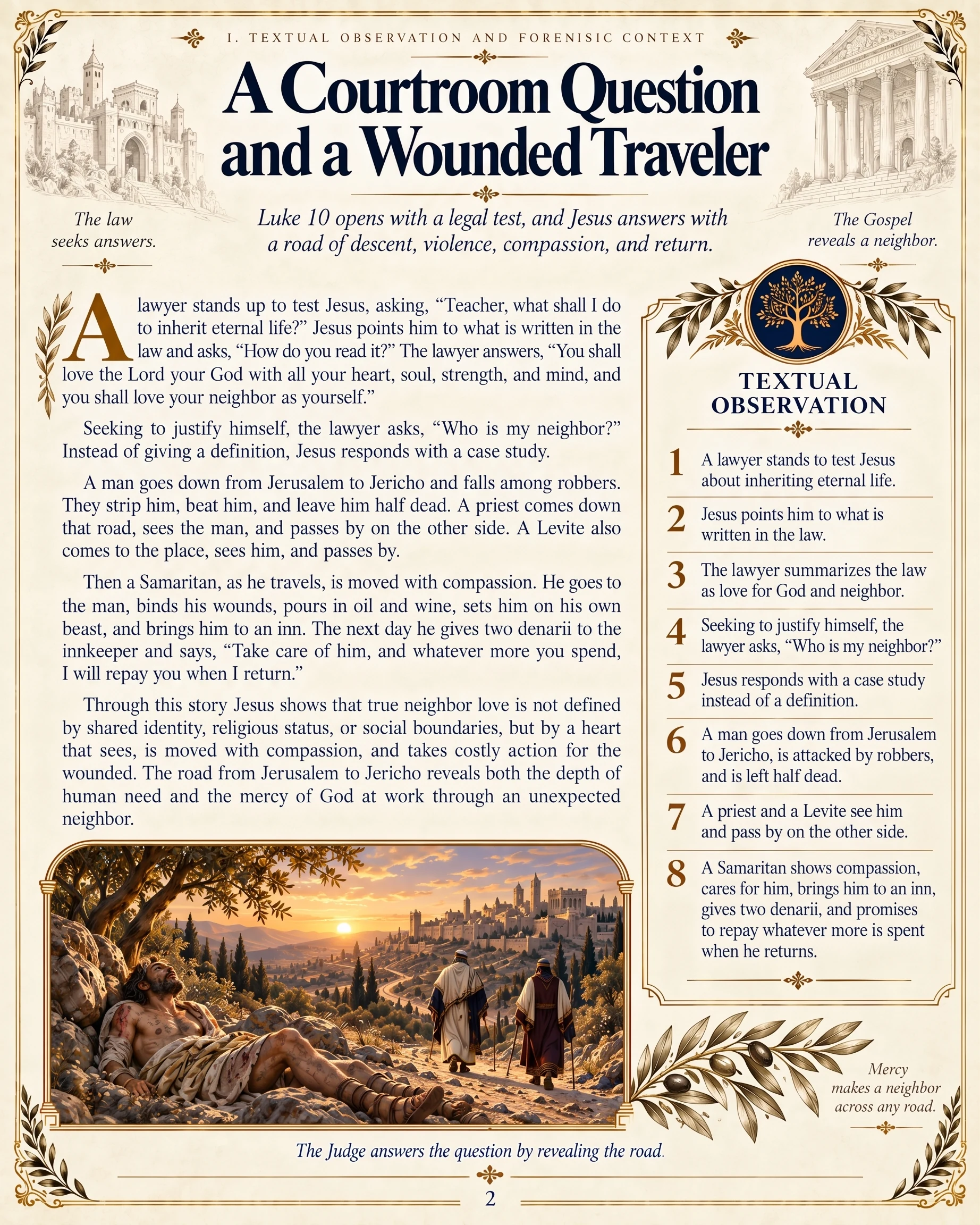
A lawyer asks Jesus about eternal life and who his neighbor is. The parable follows a wounded traveler, a priest and Levite who pass by, and a Samaritan who acts with compassion, provides care, and promises to return.
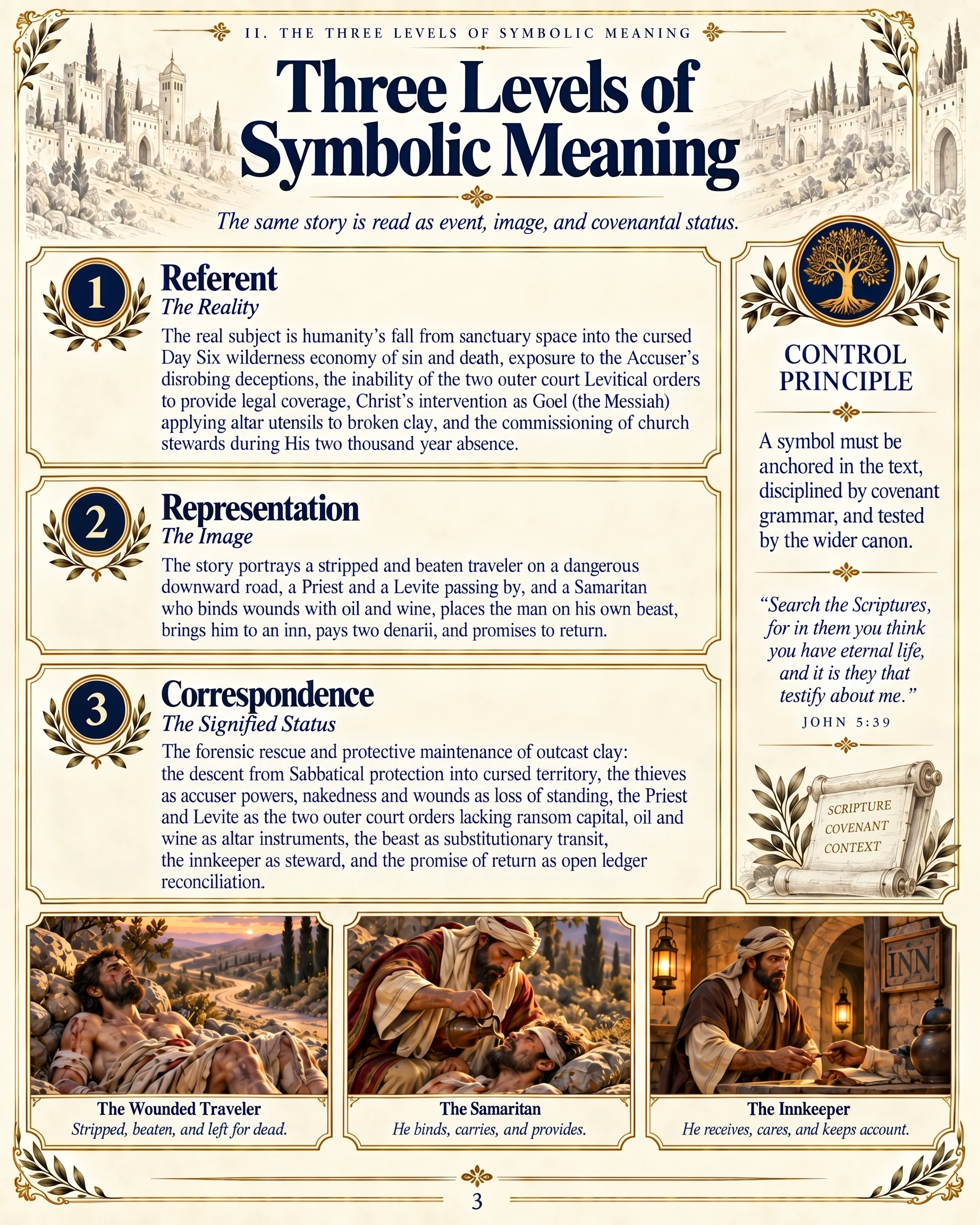
The study distinguishes three levels: the reality being discussed, the story’s images, and their proposed covenantal correspondence. It states that symbolic interpretation should be anchored in the text and tested by the wider canon.
A focused study
Receive the complete illustrated PDF. Add the premium HD package if you also want all nine original-resolution JPG pages in a separate ZIP. A free full-PDF option is available below for readers facing financial hardship.
Reader discussion
Bring your questions. Share what challenged you. Explore the argument with Scripture, curiosity, and respect for one another.
Loading the discussion…
The first approved comments will appear here. Thoughtful questions and respectful disagreement are welcome.
Reader comments are personal perspectives, not verified purchases or endorsements. Report a concern
What question or passage stayed with you?
Sign in to leave a comment.
Every comment is reviewed before it appears. Submitting a comment does not subscribe you to email updates.
Engage with ideas and arguments, not personal attacks. Disagreement is welcome. Insults, threats, harassment, and hateful content are not permitted.
Share questions and reflections about this book or study. When quoting Scripture or another source, include the reference and distinguish quotations from your interpretation.
Do not post email addresses, phone numbers, addresses, payment details, or private information about yourself or anyone else. If approved, your comment may appear with your first name and Google profile photo; your email is not displayed in the discussion.
Do not impersonate others or post spam, advertising, requests for money, or repeated messages. Comments express their authors’ views and are not endorsements or verified purchases.
Write between 20 and 2,000 characters. Every comment is reviewed before publication; submitting one does not guarantee publication. We may reject or remove comments that do not follow these guidelines.
Sign in with Google and select the consent checkbox after reading these guidelines and the privacy policy. Submitting a comment does not subscribe you to email updates.
Use the report link beside a comment, or email secretossagrados@gmail.com. Include the publication link, the comment’s name and date, and a brief explanation. Avoid including unnecessary sensitive information.