Biblical investigation
Is Jesus God? Why He Calls Himself the First and the Last
The risen Jesus takes up a title Isaiah connects to God alone. What do His words, His enduring life, and the keys of Death and Hades reveal about His identity?
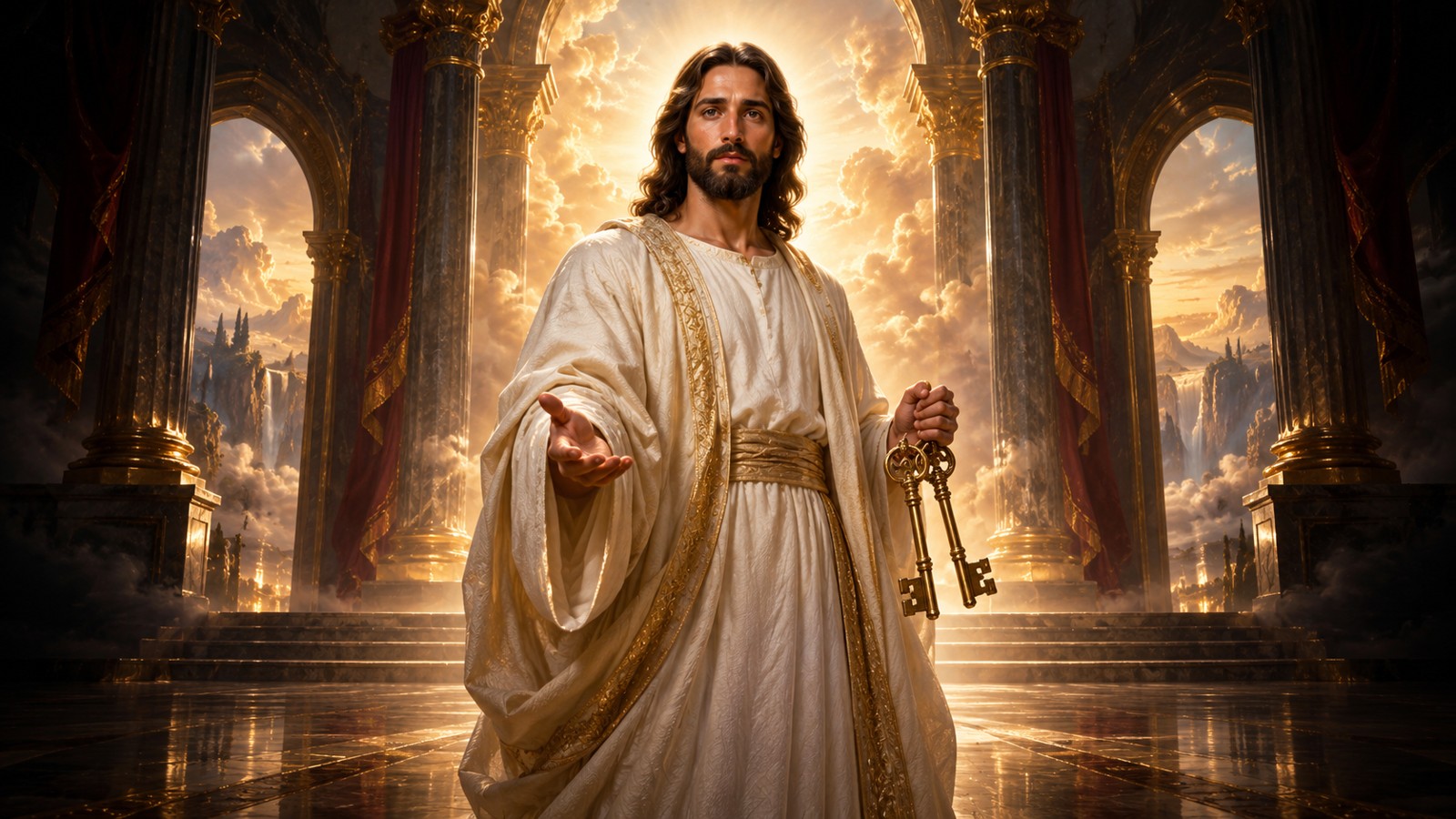
Primary biblical anchors: Revelation 1:17 to 18; Revelation 2:8; Isaiah 44:6; Isaiah 48:12; Deuteronomy 32:39 to 40.
1. The Opening Brief: Executive Summary
On Patmos, John sees the glorified Jesus Christ standing among seven golden lampstands and falls at His feet as though dead. Jesus places His right hand on John and declares:
“Fear not; I am the first and the last: I am he that liveth, and was dead; and, behold, I am alive for evermore, Amen; and have the keys of hell and of death” (Revelation 1:17 to 18, KJV).
The identity of the speaker is decisive: this is the crucified and risen Jesus. His declaration brings together the title “the First and the Last,” enduring life, and authority over death. Isaiah 44:6 places the First and Last title within Yahweh’s affirmation that there is no other God. Deuteronomy 32:39 to 40 joins divine exclusivity, power over death and life, and God’s oath by His enduring life.
The combined declaration identifies the Son with Yahweh’s unique divine sovereignty. Isaiah supplies the exclusive title; Deuteronomy joins enduring life with sovereign power over death; Revelation brings these themes together in the crucified and risen Jesus. His words reveal the identity of the One who speaks and the authority on which His command, “Fear not,” rests.
The central question is whether Jesus bears these titles merely as an exalted agent or shares the divine identity they express. The answer emerges from the complete declaration: the First and the Last is the Living One, and the One who died now holds the keys of Death and Hades. The following argument examines that united testimony alongside published interpretations that restrict its scope. [3, 4]
WHY THIS MATTERS FOR YOUR LIFE Christ’s command, “Fear not,” is grounded in His victory over death and His possession of its keys. Christian confidence rests in the crucified and risen Lord, who gives life and keeps His people. Within the reading defended here, the Savior shares the divine identity of the God whose sovereignty the Torah proclaims. The One who truly entered human death now assures His people that death does not have the final word.
2. The Visual Case Map
| SCS LEVEL | ESSENTIAL QUESTION | APPLICATION TO REVELATION 1:17 to 18 |
|---|---|---|
| 1. Referent The reality | Who is the subject? | The risen Lord Jesus Christ. Within the wider sanctuary framework, His lampstand vision is read alongside His priestly and judicial ministry (Revelation 1:12 to 20; Hebrews 8:1 to 2). |
| 2. Representation The visionary image and speech | How is He portrayed? | The glorified Son of Man touches John, commands him not to fear, identifies Himself as the First and the Last and the Living One, recalls His death, and holds the keys of Death and Hades. |
| 3. Correspondence The signified status | What identity and authority are communicated? | The titles and prerogatives identify Christ with Yahweh’s unique sovereignty. Isaiah supplies the First and Last declaration; Deuteronomy connects enduring life with power over death; Revelation places this united testimony on the lips of the risen Son. |
3. The Trial Floor Argument: Core Exegesis
Pillar I: The exclusivity of “the First and the Last”
In Isaiah’s controversy with the idols, Yahweh declares His unrivaled identity and authority. Isaiah 44:6 states:
“Thus saith the LORD the King of Israel, and his redeemer the LORD of hosts; I am the first, and I am the last; and beside me there is no God” (Isaiah 44:6, KJV).
Here the title is directly joined to the denial of any other God. Isaiah 48:12 repeats the First and Last self identification, while Isaiah 41:4 supplies a related formulation. The title therefore carries substantial theological weight when Revelation places it on the lips of Jesus.
Revelation 1:17 identifies Jesus as “the first and the last”; Revelation 2:8 repeats the title and directly associates it with the One who died and lives. These declarations establish the identity of the speaker. Revelation 22:13 brings together Alpha and Omega, First and Last, and Beginning and End. Read within Revelation 22:12 to 16, this final declaration completes the portrait of Christ as the sovereign Lord who comes to render judgment.
The Greek phrase ὁ πρῶτος καὶ ὁ ἔσχατος (ho prōtos kai ho eschatos) means “the First and the Last.” Its theological force emerges from Isaiah’s declaration of divine exclusivity. Jesus takes up the title by which Yahweh identifies Himself over against every rival claim to deity.
The title reaches beyond a position in a sequence of resurrections. Its association with the Living One and dominion over Death and Hades gives the declaration a comprehensive scope. The One who stands before John possesses the enduring life and sovereign authority that the Torah and the Prophets attribute to God.
Sign in to continue reading
Included for Supporter and Patron members, or unlock permanently for 5 Research Credits. The PDF is included.
FOR YOUR PERSONAL STUDY
Keep the complete paper
Download the illustrated PDF edition to read offline. Included with your access to this article.