Biblical investigation
Why Does the Great Multitude Hold Palm Branches in Revelation 7?
The Feast of Tabernacles and the Public Sign of Acquittal Before the Lamb. Sacred Secrets Position Paper No. 004.
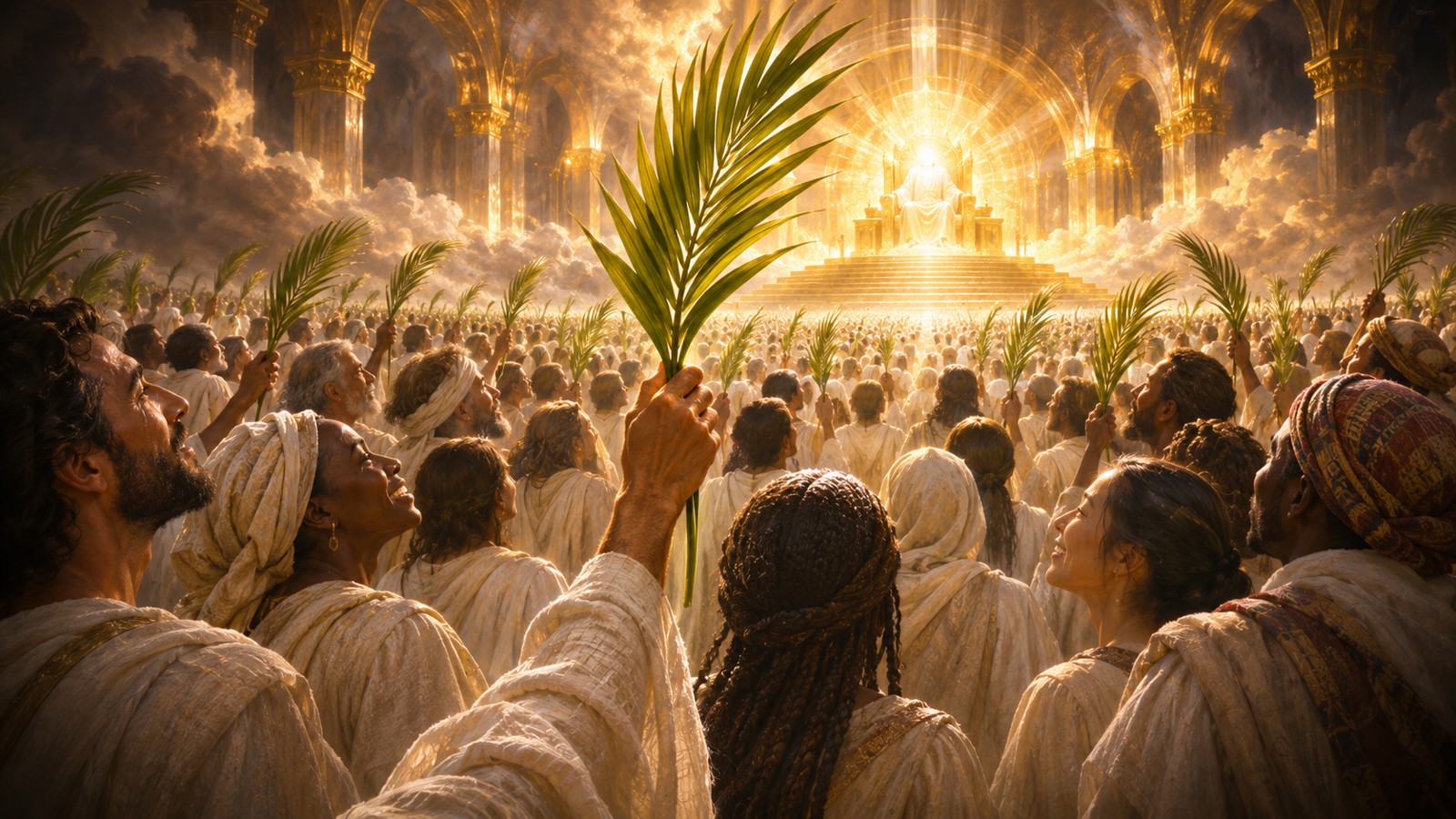
Revelation 6 ends with a question. The kings of the earth, the rich, the powerful, the enslaved, and the free seek cover among the rocks. They would rather have a mountain fall on them than face the One seated on the throne and the wrath of the Lamb. Their question is plain: “Who shall be able to stand?” In Revelation 7:9, John sees a multitude too large to count. The first thing to notice is what they are doing. They are standing.
They stand before the very throne from which others fled. Their robes are white. In their hands are palm branches. When they lift their voices, they give the credit for their salvation to God and to the Lamb. Why, at the moment Scripture shows us who can stand, does John take care to tell us what they hold?
The answer defended in this paper begins with Israel’s sanctuary calendar. God appointed a day on which His people were cleansed before Him. Five days later, He instructed those people to take palm branches in their hands and rejoice before Him. In the sanctuary reading of Revelation 7, the palms are the public sign of acquittal. The blood of the Lamb explains why the multitude can stand; the Feast of Tabernacles explains why they stand there holding palms. Revelation 6:15 to 17 and Revelation 7:9 to 15
1. Five days separate the cleansing from the celebration
On the tenth day of the seventh month, Israel observed the Day of Atonement, known as Yom Kippur. The high priest entered the sanctuary with blood and made atonement for the holy place and the congregation. Leviticus 16:30 states the purpose in words addressed to the people themselves: “that ye may be clean from all your sins before the LORD.” The question settled that day concerned their standing before God. Leviticus 16:15 to 19 and Leviticus 16:29 to 34
On the fifteenth day of that same month, the Feast of Tabernacles, or Sukkot, began. The harvest had been gathered. Families were to live in booths so their children would remember how God had sheltered Israel after bringing them out of Egypt. For the first day of the feast, God also gave an instruction that makes John’s vision immediately recognizable: take branches of palm trees, among the other plants named, and rejoice before the Lord for seven days. The Hebrew expression is kappot temarim, branches of date palms. Leviticus 23:27 to 28 and Leviticus 23:34 to 43
Consider what changed in those five days. On the tenth, the people humbled themselves while the priest made atonement. On the fifteenth, those same people were commanded to rejoice. Both acts took place before the same God. No Israelite carried a palm into the inner sanctuary to accomplish what the high priest had yet to do. By the time the worshipper took up the branch, the appointed day of cleansing had already passed.
That order gives the palm its judicial significance. The priest ministered with blood. The people answered with branches. What had been accomplished on their behalf in the sanctuary became visible in the hands of the congregation.
Sign in to continue reading
Included for Supporter and Patron members, or unlock permanently for 5 Research Credits. The PDF is included.
FOR YOUR PERSONAL STUDY
Keep the complete paper
Download the illustrated PDF edition to read offline. Included with your access to this article.